

Owning a McLaren represents more than just possessing a vehicle—it’s about commanding one of the most technologically advanced machines on the road. These British supercars blend Formula 1 engineering with street-legal functionality, creating vehicles that demand equally sophisticated maintenance and repair approaches. The carbon fiber MonoCell chassis, electrohydraulic systems, and cutting-edge powertrain technologies that make McLarens extraordinary also make them fundamentally different from conventional vehicles—or even other exotic marques.
The question isn’t whether your McLaren will eventually need service; it’s about ensuring the technicians touching your investment possess the knowledge, equipment, and experience these machines require. Generic automotive expertise simply doesn’t translate to McLaren repair, where a single diagnostic misstep can cascade into thousands of dollars in unnecessary work or, worse, undetected issues that compromise performance and safety.
The Engineering Reality Behind McLaren’s Complexity

McLaren Automotive emerged from decades of motorsport dominance, and that racing DNA permeates every aspect of their road cars. The brand’s commitment to carbon fiber construction, pioneered with the legendary F1 and refined through models like the 720S, 765LT, and Artura, creates unique structural considerations. Unlike aluminum or steel-bodied vehicles, carbon fiber requires specialized knowledge for assessment and repair—even minor incidents demand expertise that extends beyond conventional body shop capabilities.
The ProActive Chassis Control system exemplifies McLaren’s technological sophistication. This hydraulically-interconnected suspension doesn’t simply adjust damping rates; it manages body control through complex fluid dynamics coordinated by multiple sensors and processors. Diagnosing issues within this system requires manufacturer-specific diagnostic equipment and interpretation skills that general repair facilities simply cannot provide.
McLaren’s twin-turbocharged V8 powertrains, whether the M838T series or newer variations, operate at extreme performance thresholds. These engines generate tremendous specific output—often exceeding 100 horsepower per liter—through precise turbocharger mapping, fuel delivery timing, and thermal management. The margin for error in maintenance or repair is minimal. Using incorrect fluids, improper torque specifications, or misunderstanding the engine’s operational parameters can trigger protective modes or cause long-term damage that manifests only after extended operation.
Why Dealer-Alternative Specialists Matter

Many McLaren owners naturally assume authorized dealerships offer the only legitimate service option. While dealerships certainly maintain brand connections, specialized independent facilities that focus exclusively on European and exotic vehicles often provide superior alternatives. Since 1992, dedicated specialists have invested in the same diagnostic equipment, technical training, and parts relationships that dealerships maintain—but without the corporate overhead that inflates service costs.
Boca Autohaus and similar dealer-alternative shops distinguish themselves through focused expertise. Rather than servicing everything from economy cars to trucks, these facilities concentrate entirely on brands like McLaren, Ferrari, Lamborghini, Porsche, and other European exotics. This specialization means technicians regularly encounter McLaren-specific systems, maintaining the diagnostic intuition that comes from repeated exposure to particular vehicle architectures.
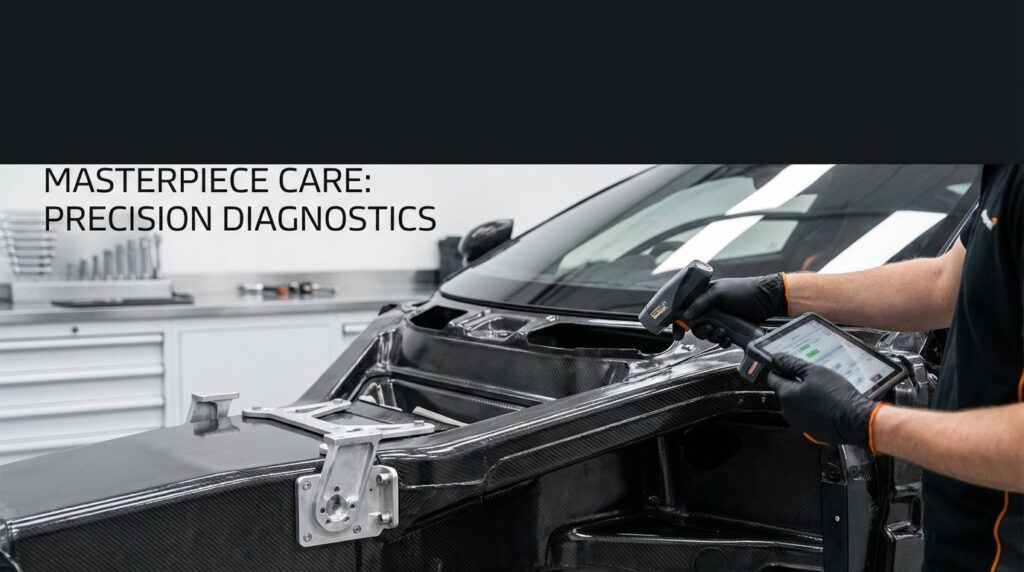
State-of-the-art diagnostic equipment represents a non-negotiable requirement for proper McLaren service. The vehicle’s Controller Area Network (CAN) bus architecture communicates through proprietary protocols that generic scan tools cannot properly access. Specialized interfaces can read and interpret McLaren-specific trouble codes, monitor real-time data streams from dozens of sensors, and perform the guided calibrations necessary after component replacement. Without this equipment, technicians operate blind, relying on guesswork rather than data-driven diagnosis.
Common McLaren Service Requirements
Understanding what your McLaren needs—and when—helps you evaluate whether a repair facility truly comprehends these vehicles. Annual services extend beyond simple oil changes. Comprehensive inspections should examine the hydraulic suspension system for fluid condition and leak points, assess brake fluid quality (critical given the extreme thermal loads these systems experience), and verify proper operation of the active aerodynamic elements.
The electrohydraulic steering system in most McLaren models requires specific attention. Unlike electric power steering, this system uses hydraulic pressure generated by an electric pump to provide steering assist. Fluid degradation or pressure irregularities affect steering feel and responsiveness—subtle changes that inexperienced technicians might dismiss or misdiagnose as alignment issues.
Tire management for McLarens demands more consideration than simply monitoring tread depth. The Pirelli P Zero Corsa or Trofeo R tires fitted to many models use compounds optimized for specific temperature ranges and performance characteristics. Rotation patterns must account for staggered sizing, and pressure recommendations vary significantly between street driving and track use. Proper wheel alignment—accounting for the suspension’s adaptive geometry—requires understanding how the ProActive Chassis Control system influences tire wear patterns.
Carbon ceramic brake systems, standard or optional on most McLaren models, present their own maintenance realities. While these brakes offer remarkable longevity compared to conventional iron rotors, they require specific bedding procedures, operate optimally within particular temperature ranges, and exhibit wear characteristics that differ fundamentally from traditional braking systems. Misunderstanding these differences leads to premature replacement recommendations or, conversely, operating brakes beyond their safe service life.
The Cost Reality of McLaren Ownership
Transparency about McLaren repair costs builds realistic ownership expectations. Annual service typically ranges from $1,500 to $3,000 depending on the model and required interventions. Major service intervals—occurring around 24 months or specific mileage thresholds—commonly cost between $5,000 and $8,000. These services involve more comprehensive inspections, fluid replacements throughout multiple systems, and detailed diagnostics of electronic control modules.
Component replacement costs reflect the specialized nature of McLaren parts. A hydraulic suspension accumulator might cost $2,000 to $3,000 including labor. Electrohydraulic steering pumps can exceed $4,000 for parts alone. Carbon ceramic brake rotor replacement—fortunately rare—can approach $15,000 for a complete set with installation. These aren’t inflated figures meant to discourage ownership; they’re honest reflections of exotic vehicle maintenance realities.
The crucial distinction lies in preventive maintenance versus emergency repair. Regular attention from knowledgeable specialists identifies developing issues when they’re manageable and affordable. A small hydraulic leak detected early might cost $800 to address; ignored until complete system failure, that same issue could require $6,000 in repairs plus potential consequential damage to related components. This is where specialized expertise delivers tangible financial value—experienced McLaren technicians recognize the early warning signs that prevent catastrophic failures.
Selecting the Right McLaren Repair Facility
Evaluating potential service providers requires asking specific questions that reveal genuine McLaren expertise. Does the facility have dedicated diagnostic equipment capable of accessing McLaren’s proprietary systems? What percentage of their work involves exotic and European vehicles? Can they provide references from other McLaren owners, ideally with similar models to yours?
Physical evidence of capability matters tremendously. Proper McLaren service requires hydraulic lifts rated for low-ground-clearance vehicles, torque wrenches calibrated to precise specifications, and climate-controlled environments that prevent contamination during fluid services. The shop should maintain technical service bulletins and updated repair procedures directly from McLaren—information that evolves as the factory identifies issues and refines maintenance protocols.
Perhaps most importantly, specialized facilities should communicate transparently. Before authorizing any work, you should receive detailed explanations of diagnosed issues, clear cost estimates, and honest assessments of urgency. The relationship between McLaren owners and their service providers functions best when built on mutual respect—you value their expertise; they respect your investment and decision-making authority.
Owner-operated facilities often provide more personalized attention than corporate service centers. When the person diagnosing your vehicle has a personal stake in the business’s reputation, quality control becomes inherent rather than procedural. This matters particularly for exotic vehicle owners, where word-of-mouth referrals within tight-knit enthusiast communities make or break service businesses.
The Long-Term Value Proposition
Proper McLaren maintenance from specialized technicians protects resale value in ways that transcend simple mechanical reliability. Comprehensive service records documenting regular attention from recognized exotic car specialists provide powerful reassurance to potential buyers. These records demonstrate that the vehicle received appropriate care throughout its life, reducing perceived risk and supporting stronger pricing during eventual sale.
Conversely, maintenance gaps or evidence of service from unqualified facilities raise immediate red flags during pre-purchase inspections. Knowledgeable buyers and their inspection specialists recognize the signs of improper maintenance: incorrect fluid specifications, generic parts substituted for OEM components, or diagnostic trouble codes indicating unresolved issues that were simply cleared rather than properly addressed.
The exotic car community values transparency and documented expertise. When your McLaren’s service history shows consistent attention from a respected dealer-alternative specialist, it communicates responsible ownership. This documentation becomes particularly valuable for limited-production models like the 765LT or Elva, where provenance and care significantly influence collectible value.
Frequently Asked Questions
Are McLarens expensive to fix?
McLaren repair costs reflect the vehicles’ sophisticated engineering and specialized components. Routine annual service typically ranges from $1,500 to $3,000, while major service intervals can cost $5,000 to $8,000. Component replacements vary widely—hydraulic suspension parts might cost several thousand dollars, while carbon ceramic brakes can exceed $15,000 for a complete replacement. These costs are consistent with other exotic marques and considerably less than neglecting maintenance until catastrophic failures occur.
How much is it to service a McLaren?
Basic annual McLaren service at a specialized facility costs between $1,500 and $3,000, covering oil changes, fluid inspections, brake assessments, and comprehensive diagnostics. Major services occurring every two years or at specific mileage intervals typically range from $5,000 to $8,000. These prices assume service from qualified dealer-alternative specialists rather than dealerships, where corporate overhead can increase costs by 30-50% for identical work.
How much do McLaren mechanics make?
Specialized exotic car technicians with McLaren expertise typically earn $70,000 to $120,000 annually depending on experience, location, and facility. Master technicians at high-volume exotic car specialists or dealerships can exceed $130,000 when accounting for flat-rate efficiency and performance bonuses. This compensation reflects the significant investment in training, diagnostic equipment, and ongoing technical education required to properly service these vehicles.
Does Elon Musk still own McLaren?
Elon Musk never owned McLaren Automotive. He famously owned a McLaren F1 in the late 1990s—which he subsequently crashed—but never held ownership stake in the company itself. McLaren Automotive is currently owned by the Bahrain Mumtalakat Holding Company, Bahrain’s sovereign wealth fund, which acquired full ownership in 2024.
Trust Your McLaren to Specialists Who Understand Excellence
Your McLaren represents a pinnacle of automotive engineering—a machine where motorsport technology meets everyday usability. Protecting that investment requires service providers who match McLaren’s commitment to precision and performance. Since 1992, Boca Autohaus has specialized exclusively in European and exotic vehicles, developing the expertise, equipment, and relationships necessary to properly maintain McLaren, Ferrari, Lamborghini, Porsche, and other prestigious marques.
Whether you’re scheduling routine maintenance or addressing diagnostic concerns, you deserve transparent communication, accurate diagnostics, and work performed to exacting standards. Your McLaren isn’t just another car—it’s an expression of automotive passion that merits equally passionate care from specialists who understand what makes these machines extraordinary.